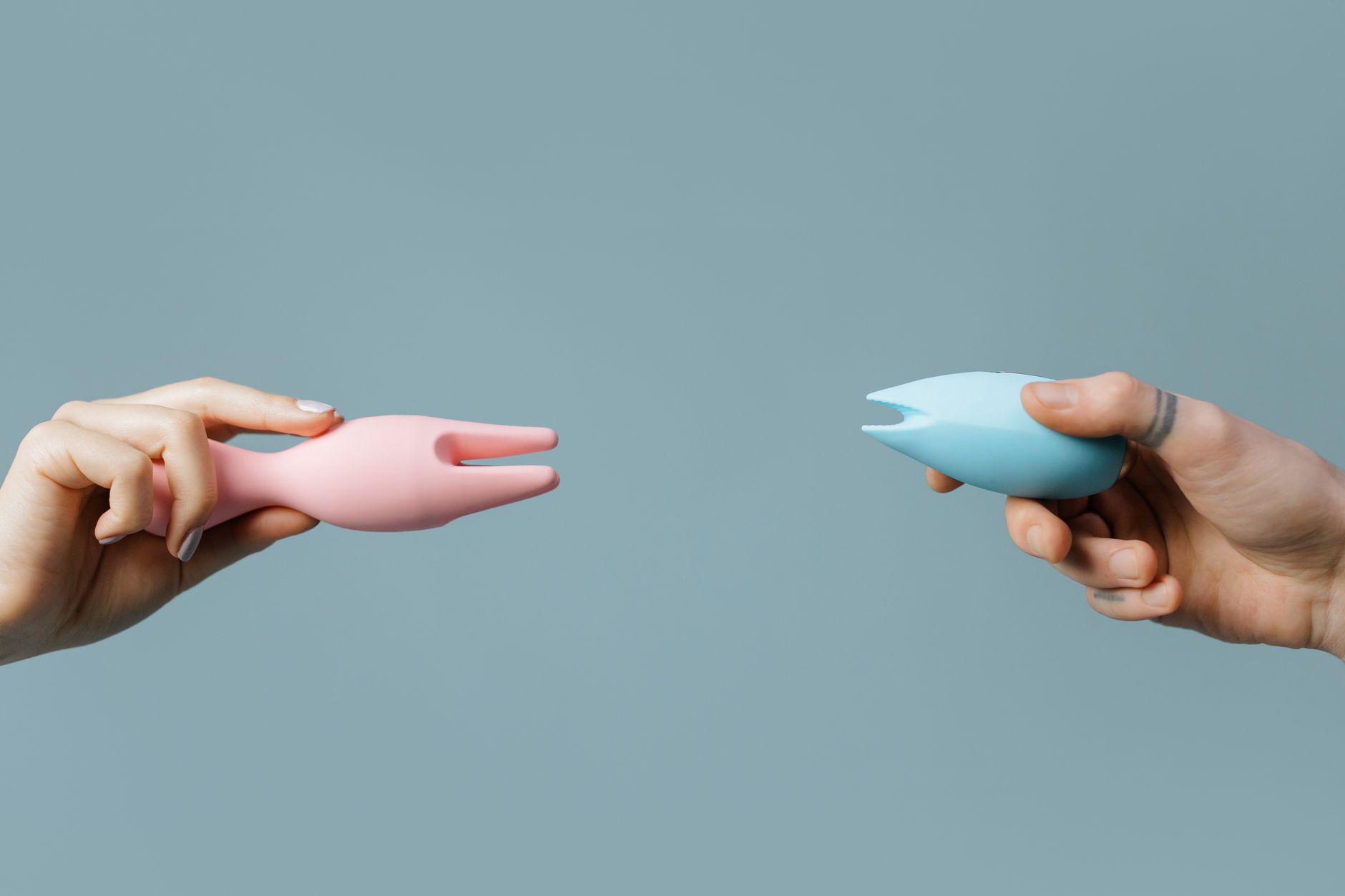
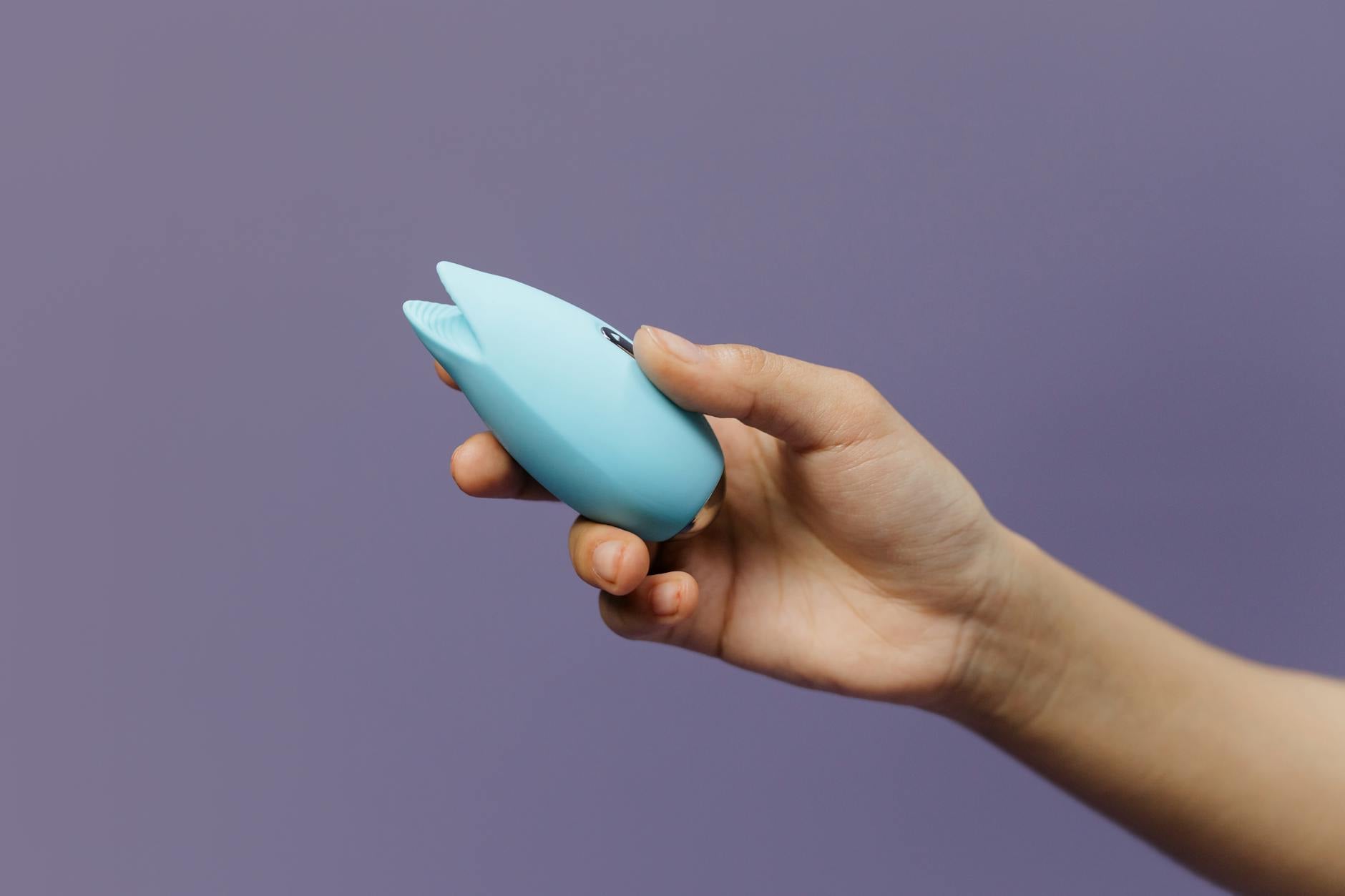
You're in bed. Your partner's there. You feel the clock ticking in your chest even though nobody said a word about time. Your body knows you're "supposed" to come by now, and that knowledge transforms pleasure into performance. The harder you chase the orgasm, the faster it runs away. This is orgasm anxiety, and it's wildly common.
Here's the thing: The Lemon Pleasure designs lemon vibrators specifically because pressure kills arousal. And if you've ever felt rushed during sex, you understand why.
Your brain is a tyrant about this. When you're anxious about climaxing, your sympathetic nervous system activates. That's the fight-or-flight response. Your body tightens up. Your pelvic floor clenches. Blood redirects away from your genitals and toward your muscles, preparing you to run from a tiger. Orgasm requires the opposite state. You need the parasympathetic nervous system active. That's the rest-and-digest mode.
So the more you worry about coming, the less likely you are to come. It's a biological trap.
Research on sexual dysfunction shows that performance anxiety is one of the biggest barriers to orgasm across all genders. And for people with vulvas, the anxiety tends to compound because there's often an implicit timeline. A partner waiting. A sense that you're taking too long. Whether your partner means it or not, you feel it.
This is where air-suction lemon vibrators change the equation. Here's why:
1. They shift control to you. You hold the device. You set the rhythm. You decide when to go faster and when to slow down. That autonomy alone reduces anxiety. Your nervous system registers that you're safe, that nothing is happening to you without consent, and that you can stop anytime. That's the foundation of parasympathetic activation.
2. They provide consistent stimulation. A partner's hand or mouth varies. Sometimes lighter, sometimes harder, sometimes they change rhythm because they're tired or distracted. That unpredictability keeps you on edge, waiting for the next shift. A lemon vibrator from The Lemon Pleasure stays exactly where you put it and maintains whatever pattern you choose. Your body can relax into it.
3. They work on a different timeline than partner sex. When you use a clitoral vibrator solo or during partner sex, you're no longer synced to your partner's arousal. You're not watching their face or managing their experience. You're free to take 20 minutes, 40 minutes, or an hour. The pressure to finish by a certain point simply evaporates.
**4. They're less intimidating than the "orgasm conversation." ** Bringing up the fact that you feel rushed during sex can feel vulnerable. Using a lemon vibrator sidesteps that conversation entirely. It becomes a tool, not an accusation.
If you're using a lemon vibrator solo, start here. This builds the nervous-system foundation you need:
Set a time boundary (in reverse). Don't give yourself a deadline to orgasm. Instead, decide in advance how long you have to play, and use all of it. If you have 30 minutes, plan to spend 20 on warm-up and exploration. You're not racing to the finish. You're learning your own pace.
Start on the lowest setting. Your lemon clitoral vibrator probably has multiple patterns or intensities. Resist the urge to jump to high. Start at pattern 1 or 2. Let your body gradually wake up to the sensation. Slower arousal is still arousal.
Use lube. Water-based lubricant is your friend, especially if you're anxious. It reduces friction, increases glide, and makes the whole experience feel less pressured. Your body doesn't have to work as hard.
Pause intentionally. Every few minutes, back off the vibrator. Stop stimulation completely for 30 seconds. Let your body settle. Then return. This teaches your nervous system that pauses are normal and safe. It also prevents overstimulation and desensitization.
Track what's working without judgment. You're not hunting for the orgasm. You're mapping sensation. Does pattern 3 feel different than pattern 2? Does the angle change how it feels? Are you noticing tension in your pelvic floor that relaxes when you breathe? Curiosity is the antidote to performance pressure.
If your partner is present, the setup is slightly different:
Have the conversation first (not during). Tell your partner: "Sometimes I feel rushed during sex, and it makes it harder for me to come. I want to use a vibrator during, and I want us to slow down together." That's it. No apologies. No over-explaining.
Set a new timeline together. "I need at least 20 minutes of stimulation before I'm likely to come." Your partner now knows what the realistic window is. There's no guessing. No subtle pressure. Just information.
Your partner can engage differently. They can be inside you while you use the lemon vibrator. They can touch you elsewhere. They can simply be present while you focus on your own pleasure. The point is that your clitoral stimulation is decoupled from the rest of the sexual rhythm.
Make it about connection, not performance. Eye contact while you use the vibrator. Hand-holding. Checking in verbally. These things remind your nervous system that you're safe and supported, not being watched or judged.
Orgasm is not the goal of sex. Pleasure is. And pleasure requires presence. When you're anxious about climaxing, you're not present. You're narrating your own experience from outside your body. "Why isn't this working? Am I taking too long? Should I fake it?"
Using a lemon vibrator gives you permission to drop that narrator and just feel. Not because the vibrator is magic. Because it removes the audience. It removes the timeline. It removes the performance.
The same goes if your partner has low libido and you're anxious about satisfying them. That's a different knot to untangle, though lemon vibrators can still take pressure off you specifically.
They might, initially. It's worth naming that this isn't about them not being enough. It's about you needing a different kind of stimulation to reach orgasm. Many partners actually feel relief when the pressure to "make" you come transfers to a tool. It removes an impossible expectation.
Absolutely. Sometimes the pressure is internal. You've internalized the idea that you "should" be able to come in under 10 minutes, or that faster is better, or that something is wrong with you if you take a while. A lemon clitoral vibrator helps you rewire that. Solo play with a vibrator teaches your body what unhurried pleasure actually feels like.
No, if you use it correctly. The anxiety reduction and nervous-system calming transfer. Once you've learned what it feels like to be relaxed during stimulation, your body remembers that state. You can access it with a partner or alone.
It depends on how deep the pattern goes. Some people feel the shift in one or two sessions. Others need a few weeks of consistent, pressure-free play to rewire the anxiety. Be patient. Your nervous system is learning something new.
That's worth exploring with a therapist, especially if the pressure feels pervasive in other areas of your life. Some people internalize achievement pressure so deeply that even taking pressure off externally doesn't shift the internal narrative. Cognitive therapy can help rewire that.
Orgasm anxiety is not a personal failing. It's a nervous-system response to real or perceived pressure. Lemon vibrators from The Lemon Pleasure help because they return control to you and create space for your body to relax. That's not a workaround. That's the actual solution. Your pleasure doesn't need to be fast. It needs to be yours. Everything else follows from there.
Sources & References:
Anxiety and Sexual Function: Research from the Journal of Sex & Marital Therapy on performance anxiety as a barrier to arousal
Autonomic Nervous System: Porges, S.P. (2011). The Polyvagal Theory. W.W. Norton & Company. Explains parasympathetic vs. sympathetic activation during sexual response
Sexual Self-Efficacy: Efficacy research shows autonomy and control as key factors in sexual satisfaction and orgasm achievement