Let's name what's happening
You're in the same room but not really together anymore. The conversation stopped flowing. Sex either stopped or became perfunctory. You're sleeping in the same bed but feeling untouched. This isn't about anger or a fight. It's something quieter and somehow harder. It's disconnection.
Most couples don't talk about this. We pretend it's temporary or that it will fix itself. But disconnection doesn't reverse on its own. It compounds. And here's the thing nobody tells you: physical reconnection through shared pleasure, approached deliberately, can be the entry point back to emotional closeness.
Why disconnection happens (and why it's not what you think)
Disconnection rarely arrives as one big rupture. It accumulates. Work stress, kid schedules, a period of illness, resentment over an unresolved issue, or just the slow erosion of daily touch. One partner feels hurt and pulls back. The other interprets the withdrawal as rejection and does the same. Within months, you're operating more like roommates than partners.
Here's what makes it tricky: disconnection doesn't feel like a problem you can solve together because the act of reconnecting requires vulnerability. You'd have to say out loud that you miss them, that you feel lonely in the relationship, that you want to be touched. That's terrifying.
So couples skip straight to fixing the symptom (lack of sex) instead of the root (lack of felt connection). That's why straight-up "let's have sex" often fails. It feels transactional. It doesn't address the thing that's actually broken.
Why lemon vibrators shift the reconnection conversation
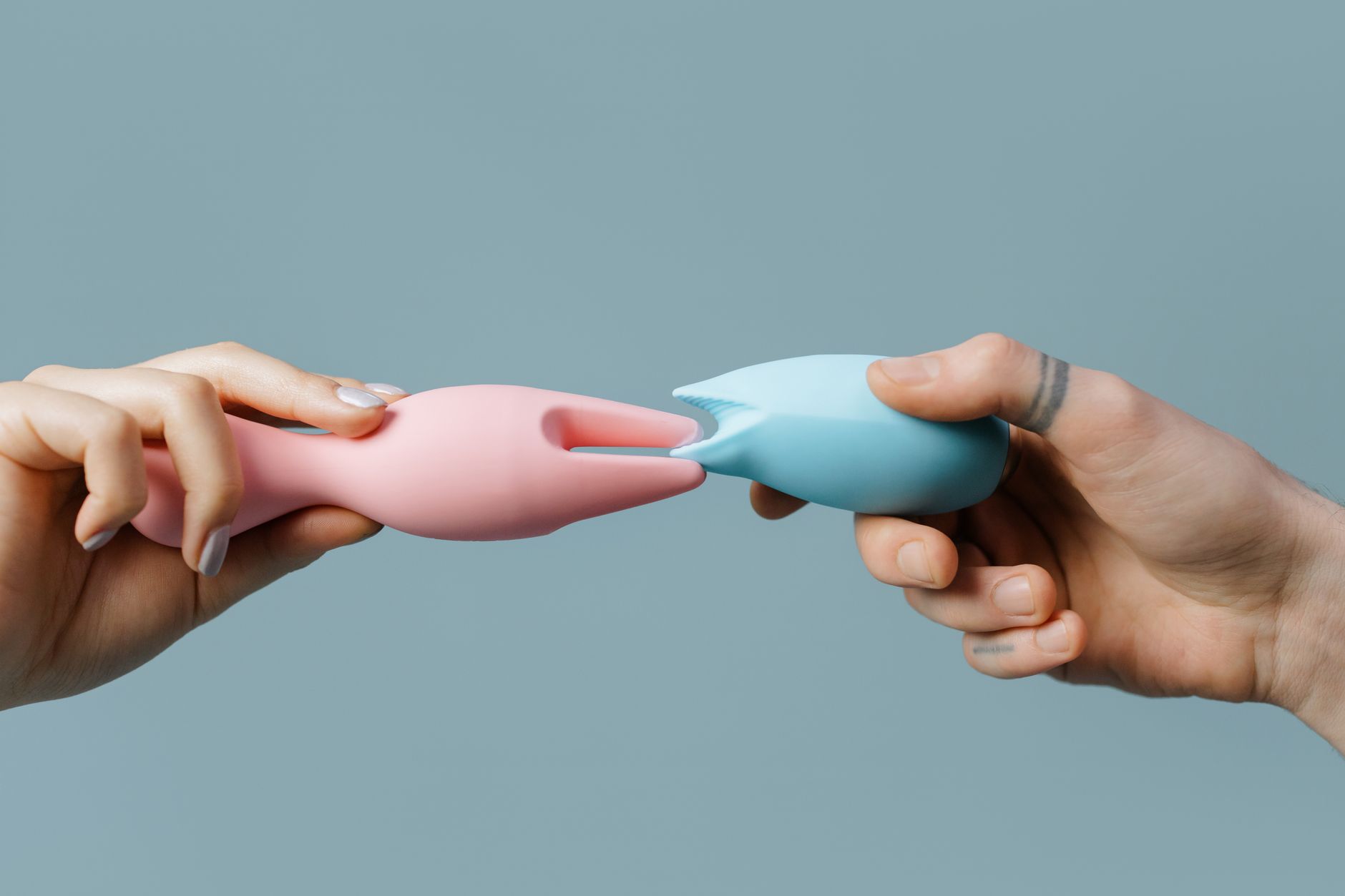
A lemon clitoral vibrator is not a quick fix. But it does something conventional sex can't: it makes pleasure collaborative without requiring the performance of arousal that both of you might not feel yet.
Listen. When you're disconnected, initiating sex feels fraught. There's pressure, there's potential for rejection, there's the awkwardness of "should we try?" A vibrator removes that single point of failure. Instead, you're exploring something together. Neither of you has to perform. The pleasure is real and measurable, regardless of how emotionally raw you both feel.
For the partner using it, a lemon vibrator (or any clitoral vibrator) makes orgasm more reliably accessible when arousal is low. That matters because when you're disconnected, arousal doesn't just show up. You're guarded. Your nervous system hasn't been signaled that it's safe to relax. A vibrator bypasses that temporary freeze and says, okay, your body can still experience sensation. Your pleasure is still there.
For the partner watching, there's something disarming about witnessing real pleasure that isn't contingent on their performance. It shifts the dynamic from "I need to turn you on" to "we're exploring this together."
Starting the conversation without shame
The barrier isn't logistics. It's the conversation. How do you even bring this up when you're already emotionally distant?
Don't start with "I want to use a vibrator during sex." That positions it as a solution to a problem, which lands as criticism. Instead, reframe it as curiosity: "I've been reading about how some couples use vibrators to feel closer. I'm wondering if you'd be open to trying that with me."
Notice what you're doing here. You're removing blame. You're making it a shared experiment, not a one-person fix. You're also giving your partner an out if they're not ready. That matters.
If they push back, don't defend the vibrator. Listen to the actual concern. Are they worried it means you're not satisfied? That's about reassurance, not technology. Are they uncomfortable with the idea of toys? That's worth understanding. Are they just not ready to be vulnerable yet? That's worth respecting, and it might mean having a bigger conversation first about what's actually broken between you.
In some cases, working through disconnection when you're anxious about performance is more foundational than jumping straight to trying new tools.
How to actually use a lemon vibrator to reconnect
Let's say you've had the conversation and you're both game. Here's how to approach this so it actually builds intimacy instead of just adding a new thing to your routine.
Set the stage. Disconnection thrives in the gaps. You need interruption-free time. That means phones in another room, kids asleep, the mental load temporarily set down. This doesn't have to be some big production. It can be 30 minutes on a Tuesday afternoon if that's what you've got. The point is intentionality. You're signaling that this matters.
Start with touch that isn't about sex. Before any vibrator enters the picture, spend 10 minutes on non-sexual touch. Kiss. Hold hands. Massage each other's shoulders. This might feel awkward after a period of disconnection. Do it anyway. Your nervous systems need to remember that touch between you is safe. This is where reconnection actually begins.
Introduce the lemon vibrator as a tool you're exploring together. One of you uses it on yourself while the other watches and participates. This sounds vulnerable (it is), but it's also radically honest. There's no performance. There's no pressure. Just two people being present with pleasure.
Slow down. One of the biggest mistakes couples make is rushing through the experience to get to orgasm. That defeats the whole point. If the person using the vibrator comes in two minutes, stay present. Talk about it. Notice where the pleasure is concentrated. Let your partner direct the intensity. This is a conversation with your bodies, not a race.
Afterwards, actually talk. This is where the real reconnection happens. How did it feel? What was surprising? What do you want to try next? Don't skip this part. The talking is not the cool-down. It's the point.
The emotional work underneath
A lemon clitoral vibrator can rebuild physical connection. But it won't fix the thing that caused the disconnection in the first place. If you've been distant because of unresolved resentment, a fight you never finished, or a betrayal you didn't fully process, the vibrator is a door opener. It's not the whole conversation.
Sometimes that conversation needs help. A couples therapist can guide you back to each other faster and more safely than you'll get there alone. There's no shame in that. Disconnection is one of the most common things couples face, and it responds well to intervention.
But here's what I know from two decades of working with couples: the ones who reconnect are the ones who start somewhere. They decide that the distance matters enough to change it. A vibrator, when approached with intention and honesty, can be that somewhere.
People also ask
Will using a vibrator make my partner feel like they're not enough?
No, if you frame it right. The conversation that precedes this matters enormously. You're not replacing your partner. You're exploring pleasure together with a new tool. In fact, many partners find watching their significant other experience intense pleasure incredibly hot. The vulnerability is the thing that builds connection, not the vibrator.
What if my partner resists the idea?
Listen to why. Resistance usually isn't about the vibrator itself. It's about what the vibrator represents ("Does this mean I'm not satisfying you?") or shame they carry around pleasure and sexuality. Address the actual concern, not the surface resistance. And give them space to say no. Pressuring someone to use a vibrator won't reconnect you. It'll deepen the distance.
How do lemon vibrators compare to other options for couples reconnection?
Lemon clitoral vibrators are designed for targeted stimulation without requiring significant pressure or movement, which makes them good for people who want to slow down and stay present. They're also less intimidating than larger devices for couples new to this. That said, there's no universal best. What matters is that you pick something that feels right for both of you.
Should we use a lemon vibrator during partnered sex or separately?
Start separately. When you're disconnected, the goal is rebuilding comfort and presence. Once you're more connected, you can experiment with incorporating a vibrator into partnered sex. How to use lemon clitoral vibrators during couples sex without making it awkward covers that transition if you want to explore it later.
How often should we use a vibrator if we're trying to reconnect?
Frequency matters less than consistency. Once a week is enough. The point is regularity, so your nervous systems come to expect and trust the experience. It's not about cumulative pleasure. It's about reestablishing that you're safe with each other.
What if we try this and it doesn't help?
It won't fix a broken relationship on its own. If disconnection runs deep, you might need more than reconnection rituals. You might need therapy. A vibrator is a tool to rebuild physical intimacy, not emotional repair. But physical reconnection often opens the door to conversations you couldn't have before. Give it a real try (four to six times), then assess. If nothing's shifting, that's the signal that you need professional support.
The real reconnection
Disconnection is painful, but it's not permanent. Most couples who decide to rebuild do. The ones who wait, hoping it fixes itself, often don't.
A lemon vibrator won't save your relationship. But approaching pleasure together, with honesty and care, might remind you both why you chose each other in the first place. That's where the real work begins.