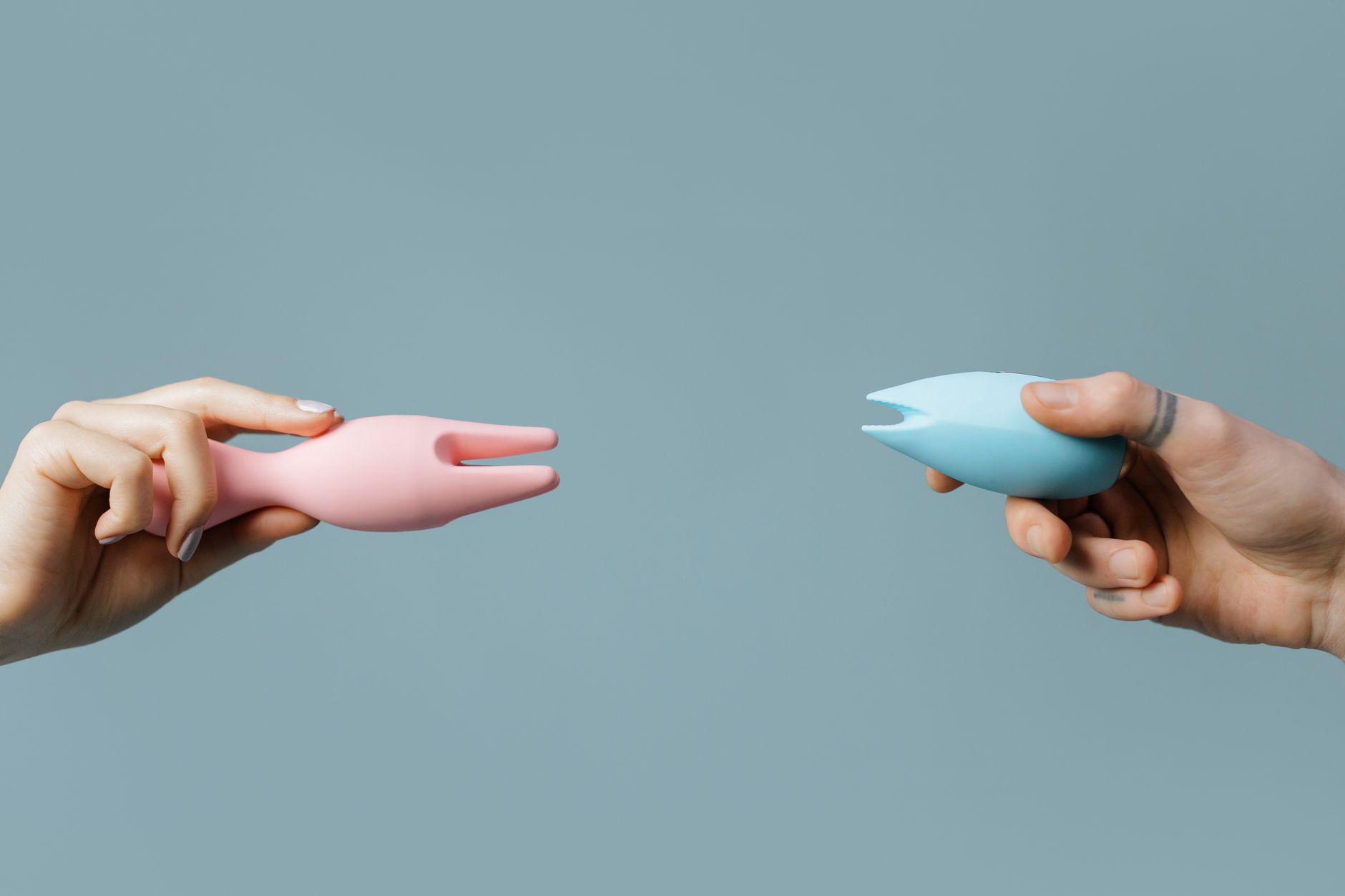
How to Use Lemon Vibrators When Your Partner Resists Using Toys
Your partner shuts down at the mention of toys. Here's how to reframe the conversation, ease their fears, and actually use something like the Lem together.
Here's the thing: when your partner resists using toys, it's rarely about the toy. It's almost always about what they think the toy means. That you're not satisfied. That they're not enough. That something is fundamentally broken between you.
I've worked with couples for decades, and the resistance patterns are almost identical. Your partner thinks one of five things.
1. "You want it because I'm not doing it right." This is insecurity dressed up as principle. They think introducing a vibrator is a referendum on their performance. The Lem feels like evidence that you need something they can't provide.
2. "Toys are for people with problems." There's this weird cultural narrative that toys are remedial, a sign something is wrong with you or your relationship. That's completely false, but most of us grew up absorbing it anyway. Your partner might genuinely believe that wanting to introduce a lemon vibrator signals dysfunction.
3. "It means you don't really want me." Sex, in their mind, is a direct line between two people. A toy feels like a third presence, a substitute. They're imagining you'd rather be alone with it than with them.
4. "This is going to change everything, and I don't control it." Introducing a new tool into your sexual rhythm feels destabilizing. Your partner has adapted to your current dynamic. Adding something new feels risky, unpredictable, potentially threatening to what works.
5. "I don't want to learn something new right now." This one's honest. Sometimes resistance is just fatigue. Sex is already vulnerable; adding a learning curve feels like work rather than pleasure.
Understanding which one is driving their resistance changes everything about how you approach the conversation.
Most people lead with the pitch: "I want to try a toy. It would really help me." That lands as a complaint.
Instead, lead with connection. Pick a calm moment, not in the bedroom, not during an argument, not right before sex. Say something like this:
"I want to talk about something, and I need you to know upfront that this isn't about you not being enough. It's the opposite. I feel safe and connected to you, and that's why I want to explore this."
Then pause. Let them breathe. Then be specific about what you're actually asking for.
"I've been thinking about trying a clitoral vibrator during sex with you. Not instead of you. With you. I think it could actually feel really good for both of us, and I'm curious about it."
Notice what you didn't say: you didn't ask for permission. You stated an interest and invited them to explore it. You didn't apologize for wanting pleasure. And you explicitly named that this is shared, not separate.
If your partner shuts it down, don't defend. Don't convince. Don't negotiate. Instead, ask a genuine question:
"I'm hearing 'no' right now. Can you tell me what that's about?"
Listen without interrupting. Don't fact-check their feelings. Let them tell you what they think this means. Often, they're catastrophizing. "You'll only want the toy" or "It means you're not happy with me."
When they're done, you can gently correct the catastrophe.
"I hear that you're worried this means something's wrong with us. That makes sense. But that's not true. What's true is I want to know what else feels good to me, and I want you there when I discover it."
Then, critically, you drop it for a while. You've planted the seed. Pushing harder just makes them defensive.
If direct conversation isn't landing, sometimes proximity does the work. Start talking openly about pleasure in ways that don't demand response.
Mention that a friend tried a clitoral vibrator and loved it. Say that you read something interesting about how different stimulation patterns affect orgasm. Ask them a genuine question: "Do you ever wonder if there's something that would feel even better?"
These aren't pitches. They're normalizations. You're slowly reframing toys from "weird couples thing your partner wants" to "normal thing people explore."
You're also modeling comfort with the topic. If you seem relaxed and curious rather than defensive or desperate, they're more likely to relax too.
When your partner finally softens, don't launch into a production. Start small.
Show them the Lem or whichever lemon vibrator you're considering. Let them hold it. No pressure. "This is what I was thinking. It's quiet, it's small, it's really well designed." Just facts.
Then suggest a specific, low-stakes scenario: "What if we tried it during foreplay next time? No pressure to figure everything out. Just see how it feels."
The key is removing the stakes. You're not testing your relationship. You're not proving anything. You're just... trying something.
This is where most couples stumble. They get tense, overthink it, worry about performance, or make it weird.
Here's what actually works: you do the heavy lifting. You guide the experience. Show your partner what feels good. Let them see your pleasure. That's the magic moment. When they watch you respond to something you've chosen for yourself, suddenly the tool stops feeling like criticism and starts feeling like an invitation to something mutual.
Say things like: "That feels amazing," or "Can you try it a little slower?"
Your partner is going to feel useful, not replaced. They're watching you enjoy something, and they're part of that.
Some partners get there slowly. They try it once, feel a little better about it, but don't become evangelists. That's fine. You don't need them to love the Lem as much as you do. You just need them to be willing.
Keep using it. Keep enjoying it. Don't make them responsible for your pleasure. When you take ownership of what feels good to you, it relieves them of the pressure to be everything. Paradoxically, that often makes the whole thing feel less threatening.
After a few times, you might notice your partner initiating: "Should we get the vibrator tonight?" That's progress.
Don't surprise them with a toy in the bedroom. Don't present it as a solution to a problem they haven't acknowledged. Don't compare them to previous partners or suggest a vibrator would fix things you've complained about.
Don't be passive aggressive: "Fine, I'll just use it alone then." Don't frame it as an ultimatum. Don't make them feel like you're going behind their back if you do use one solo.
Most importantly, don't interpret their resistance as a reflection of how much they love you. Resistance to change is human. It doesn't mean they don't care.
Introducing something like a lemon clitoral vibrator into your shared sex life is actually a relationship skill. It requires you to ask for what you want, handle discomfort, stay curious about your partner's fears, and move at a pace that works for both of you.
You're not just introducing a toy. You're teaching your partner that you can advocate for your own pleasure and still honor their boundaries. That's the skill most couples never develop, and it's the one that changes everything.
If you're really stuck, couples therapy isn't overkill. A good therapist can help you both understand what the resistance is really about and move forward from there. This is exactly what I spend sessions on.
Your pleasure matters. Your curiosity matters. And your partner's fears matter too. All three can exist at the same time, and you can work with all three without anyone losing.
There's a huge difference. A true refusal sounds like: "I will never be okay with this. Don't bring it up again." That's rare, and if that's your situation, you've got a bigger conversation ahead about sexual autonomy.
Most resistance sounds like: "I'm not ready yet," or "I don't know about this," or "Can we wait a while?" That's discomfort, not refusal. Discomfort can shift with time, conversation, and experience. Don't treat it the same way.
Honestly? Yes. Your body, your solo time, your choice. But don't hide it if they discover it. That switches the conversation from "I want to explore pleasure" to "I was hiding something from you," and that damages trust for no reason.
If you're using a toy alone while your partner is resistant to using one together, just be matter-of-fact about it: "Yeah, I use my vibrator sometimes when you're not around. It's part of how I take care of myself." Confidence neutralizes shame on both sides.
That's not consent. That's conditional consent, and it's a sign you need a real conversation. "I'm noticing you seem uncomfortable when I use this. What's coming up for you?"
If they genuinely can't get past judgment or resentment, that's a couples issue that probably needs professional help. You can't negotiate someone into acceptance. You can only work with someone who's genuinely willing.
Maybe, at first. That's a story they're telling themselves, not a fact about your relationship. What actually matters is your behavior over time. When you keep showing up, keep being intimate, keep connecting, the toy becomes clearly what it is: a tool, not a replacement.
If they said "not right now," wait a few months and revisit gently. You're not asking for a different answer. You're checking in: "I've been thinking about that conversation we had. Do you feel any differently?"
If they said "I don't want to discuss this again," then you respect that boundary. Period. But for most couples, a gentle revisit after some time passes and they've had time to sit with the idea works better than pushing in the moment.
Yes. When both partners can ask for what they want and respond to each other without defensiveness, the entire sexual relationship deepens. If introducing a toy is the catalyst for learning how to advocate for your own pleasure, then yes, the tool helped. But it's the communication shift that changed things.
Start with the conversation. The toy is just the medium.
Once you and your partner move past the resistance phase, something interesting happens. You stop asking permission to want things. Your partner stops taking your desires as criticism. Sex becomes less about performance and more about exploration.
That's the real win. The Lem or any lemon clitoral vibrator is just the vehicle for getting there.
If you're stuck in the resistance phase right now, start with one conversation using the framework I've given you. Don't expect everything to shift immediately. But be willing to name what's actually happening and work through it together.
Your pleasure, your partner's comfort, and your relationship can all expand at the same time. You just have to approach it with honesty and patience.
If you need more support navigating relationship dynamics around pleasure, reach out to work through it with a professional. That's exactly what I'm here for.
Contact us to talk through what's happening in your relationship.