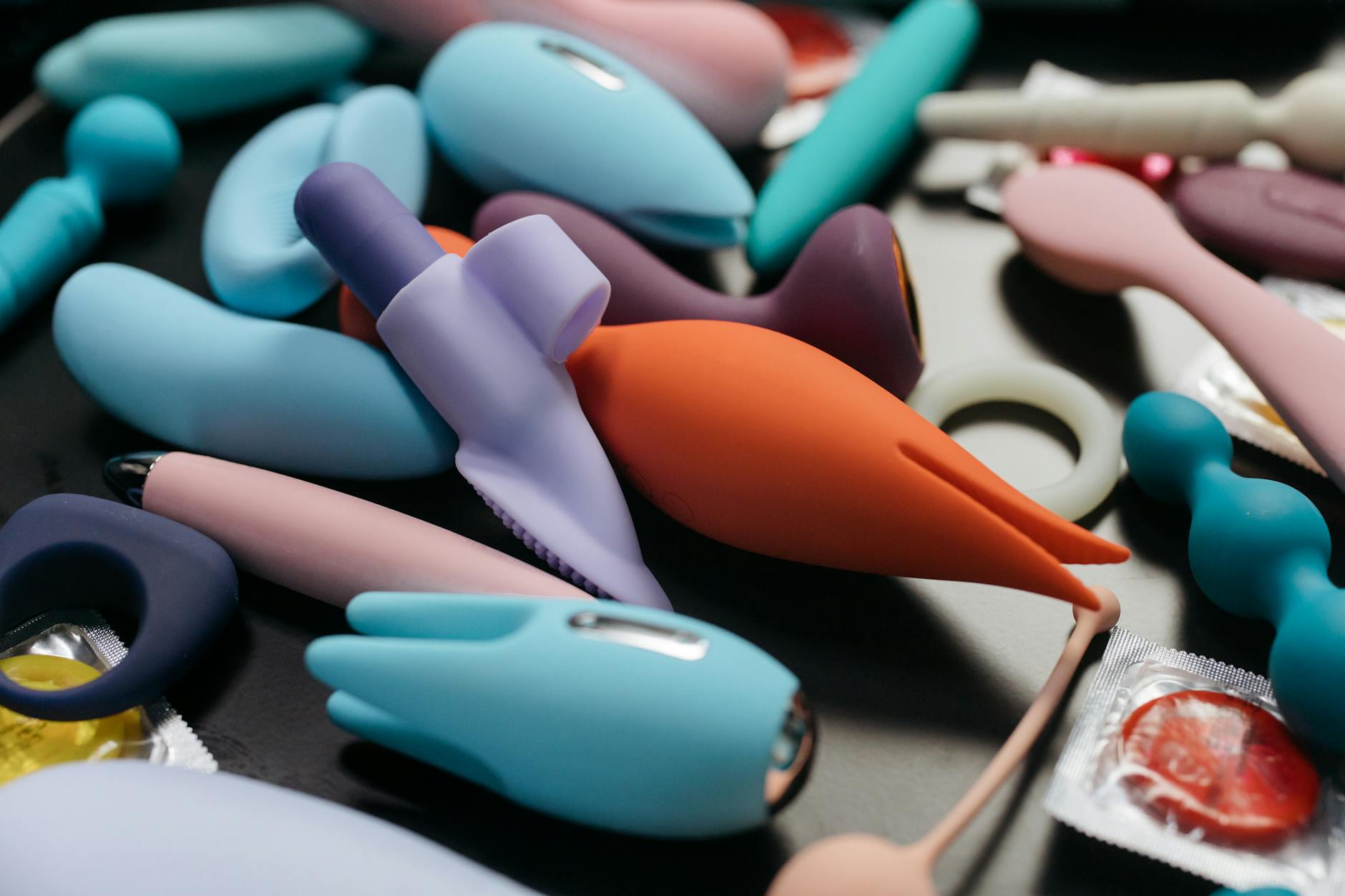
When touch feels muted or distant, it's not a personal failing. Here's what's actually happening and why lemon vibrators are the exact tool that helps.
You touch yourself and it feels like touching someone else's arm. The neural message gets to your brain, but it arrives quiet, muffled, distant. Or sometimes it doesn't arrive at all. You're doing exactly what used to work. Nothing has changed except everything feels flat.
Reduced sensation during solo play is weirdly common and wildly undertalked about. Most people assume they've lost the ability, that their body is broken, that pleasure is just not going to happen anymore. None of that is true.
Sensation doesn't vanish for one reason. It usually comes from a tangle of things happening at once.
Stress and attention. When your brain is running three background tasks (that email you didn't send, whether you locked the door, that conversation you're replaying), your body isn't fully invited to the party. Your nervous system stays partially in threat mode, which literally dampens sensation signals. It's not laziness. It's neurology.
Pelvic floor tension. The pelvic floor is the muscular bowl under your pelvis. When it's chronically tight (from stress, poor posture, or just living), blood flow decreases and nerve signals get muted. The tissue becomes less responsive, not less feeling.
Desensitization from repetitive friction. If you've used the same technique the same way for years, your nerve endings adapt. They stop firing as dramatically because they've learned this sensation pattern. Your body is being efficient, which is great for survival and terrible for pleasure.
Hormonal shifts. Anything that changes your estrogen, progesterone, or testosterone affects genital blood flow and tissue thickness. Birth control, cycle phase, medications, or aging all play a role.
Dissociation or disconnection. Sometimes reduced sensation is emotional. You're not fully present in your body. This happens after trauma, during anxiety, or when you've spent years treating your body as functional rather than feeling.
None of these are character flaws. They're just how bodies work under pressure.
A standard vibrator hums directly against tissue. If sensation is already dulled, direct vibration can feel distant or frustratingly surface-level.
Lemon clitoral vibrators like the Lem work differently. They use air-suction technology, which creates a gentle, rhythmic pulse instead of direct vibration. Here's why that matters.
Suction creates a broader, gentler stimulation pattern that engages more nerve endings at once. Instead of one focused point of friction, you get a wave of pressure change. This pattern tends to cut through numbing better than traditional vibration because it's recruiting different neural pathways.
Suction also doesn't require the same intensity of sensation to register. Because the stimulation is structural (pressure change) rather than friction-based, your body can feel it even when direct touch feels muted.
Last piece: lemon sucker vibrators feel less aggressive. When sensation is dulled, some people instinctively reach for more intense stimulation and end up in a frustration spiral. Suction feels playful, which keeps your nervous system calmer and more receptive.
Start with the lowest setting. Your instinct will be to crank it up because you're not feeling much. Don't. Start at pattern one and sit with it for 30 seconds. Your nervous system needs time to notice the signal. Jumping to high intensity teaches your body to expect overwhelm instead of gentle invitation.
Build presence first. Before touching yourself at all, spend two minutes just breathing. Close your eyes. Notice what you can feel on your skin (the air, your clothes, the temperature). This tiny ritual primes your nervous system to pay attention. You're basically saying to your brain, "We're tuning in now."
Use lube. Even if you don't think you need it, use it. Lube reduces the amount of friction your nerve endings have to interpret, which means the message gets through cleaner. Water-based works beautifully with lemon sexual toys.
Stay with one pattern for 3-5 minutes. This is longer than you probably do now. Your nerve endings need time to wake up. If you jump patterns every 30 seconds, you're resetting the signal each time. Consistency builds momentum.
Explore timing. Some people find sensation is sharper after exercise (increased blood flow), or at different points in their cycle, or at specific times of day when cortisol is lower. Track what you notice. Pattern recognition matters.
Layer sensation. Touch another part of your body at the same time. Your inner thigh, your breasts, your neck. You're creating more input channels, which helps your brain feel more.
Reduced sensation often comes tangled with self-doubt. You end up performing pleasure for an imaginary audience instead of actually feeling it.
Let yourself be bored for a minute. Let it feel awkward. Let it take 20 minutes instead of five. You're rebuilding the connection between your brain and your body. That takes patience.
If the session doesn't lead anywhere, that's data, not failure. Maybe you needed more time. Maybe you needed different music. Maybe your nervous system was too activated by a work email. These are all solvable.
One thing I tell my clients: reduced sensation is often your body's way of saying something needs attention. Not necessarily medical attention. Maybe you need sleep. Maybe you need to move your body more. Maybe you need to stop treating pleasure like a task and start treating it like an exploration.
Lemon clitoral vibrators help a lot of people reclaim sensation. They don't help everyone, and they're not a substitute for other things that matter.
If sensation is completely absent and hasn't returned after a few weeks of consistent practice, talk to a doctor. Some medications do genuinely dampen genital sensation in ways that require medical conversation. Diabetes, nerve damage, and hormonal conditions can also affect this.
If reduced sensation pairs with anxiety or trauma responses, working with a therapist who specializes in somatic (body-based) work can be more valuable than any toy. Your nervous system needs to learn it's safe to feel again.
If it's a relationship situation (reduced sensation only happens solo, or only with your partner), the issue might be partly about connection or safety, and that's a different conversation entirely.
Your body doesn't stop being able to feel pleasure. What happens is the signal gets quieter, the attention wanders, the nervous system gets stuck in protection mode. A lemon vibrator isn't magic. It's a tool that works because it's designed to reach that muted signal and turn up the volume without demanding intensity.
Sensation returns fastest when you're curious instead of frustrated. When you're willing to sit with discomfort. When you treat your body like a friend who's been quiet for a while and needs patience to speak again.
Absent sensation, even with stimulation, usually means your nervous system is offline. This happens with high stress, dissociation, or when your brain is actively trying to not feel something (often a protection mechanism). A vibrator can't override that. What helps is calming your nervous system first. Try grounding exercises, breathwork, or just sitting quietly before touching yourself. Sometimes the answer is addressing what's making your body want to hide.
It depends on the type and location of nerve damage. Some people with reduced sensation from neuropathy or injury find that suction-based stimulation (which works differently than traditional vibration) does register better. It's worth trying, but talk with your doctor first, especially if the nerve damage is recent or from a specific condition. They can tell you whether suction-based lemon sexual toys are safe for your situation.
Usually yes, but not always in a straight line. Sensation often returns in waves. You'll have a few sessions where you feel everything, then a session where you feel almost nothing, then it stabilizes. This is normal. Your nervous system is recalibrating. Stick with it for at least a month before deciding it's not working. Changes in hormones, stress, or sleep can shift things week to week.
This is wildly individual. Some people notice a difference in two or three sessions. Others take weeks. The key is consistency, not intensity. Ten minutes twice a week of deliberate, present practice beats 30 frantic minutes once a month. You're rebuilding a connection, not chasing a quick fix.
That's actually useful information. It often means the issue is attention or presence, not physical sensation. When someone else is touching you, you can't wander into your to-do list as easily. Try recreating that externally focused attention when you're alone. Play music, light a candle, position yourself so you can watch what's happening. Make it feel less like a private solo moment and more like you're present to your own body as someone you're curious about.
Yes. Rhythmic, sustained patterns work better than chaotic or changing ones. Look for patterns that feel more like a pulse than a buzz. The Lem's signature suction patterns tend to work well because they're structured and buildable. Start with the most basic, rhythmic pattern and only switch if it's genuinely not working after five minutes. Your nervous system needs predictability to relax into sensation.
Reduced sensation during solo play is fixable, usually relatively quickly, and almost always a sign that something else is asking for attention. Whether that's stress, disconnection, or just a body that's been ignored for too long, the answer usually involves patience and a tool that works smarter than just harder.
Lemon vibrators, especially clitoral vibrators using suction rather than direct vibration, give your body a different language to work with. Sometimes that's exactly what wakes sensation back up.
If you're curious about how to get started or want to talk through what's going on, we're always here. Reach out anytime.