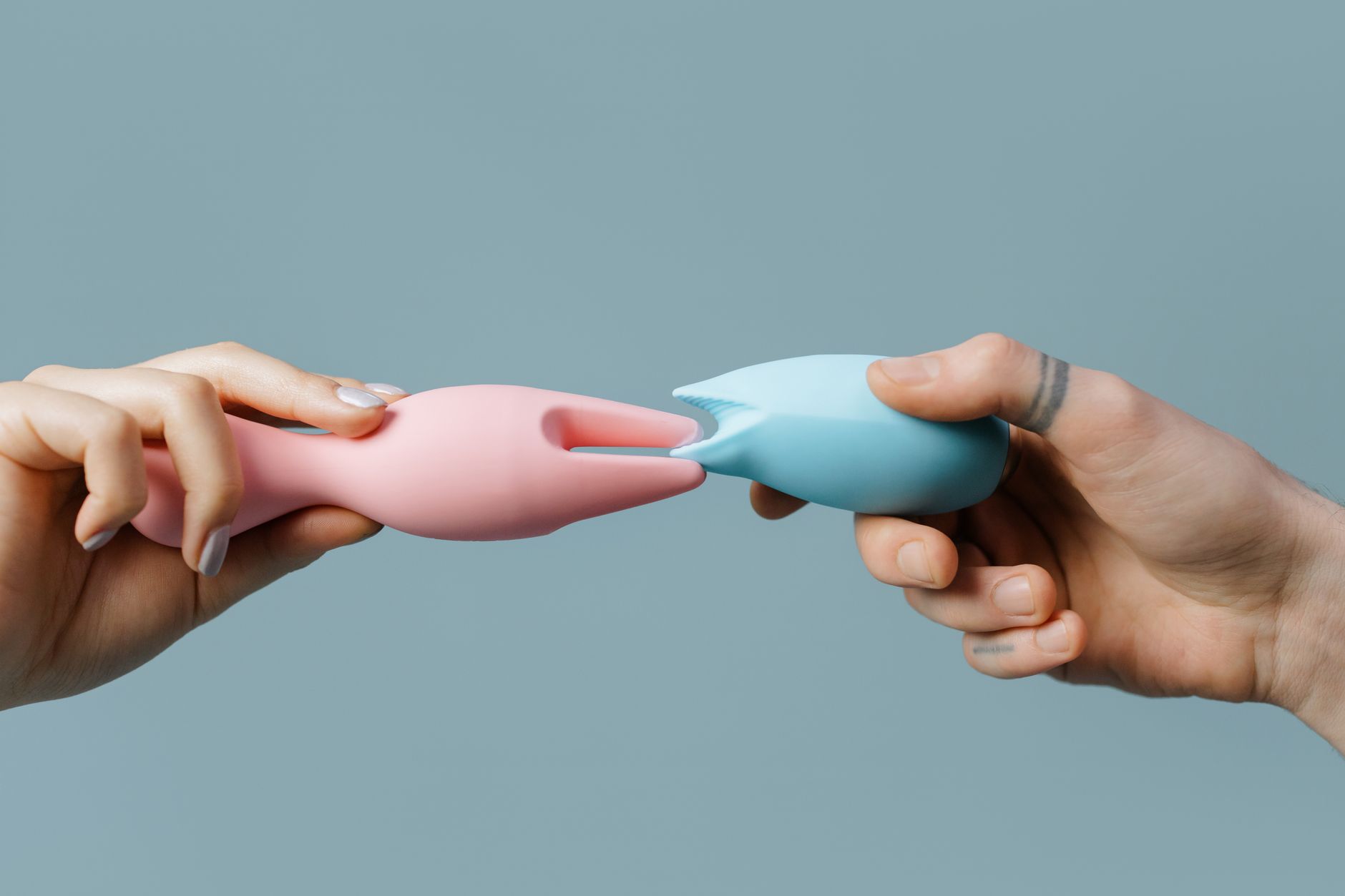
How Lemon Vibrators Help When Orgasms Feel Weaker or Less Intense
Orgasm texture changes for a dozen reasons, most of them fixable. Here's what's actually happening and how air-suction clitoral vibrators rebuild intensity.
Orgasms getting softer, duller, or less full-body used to mean one thing. Now it could mean ten. The good news: most of them are reversible, and many people find that understanding the cause opens up entirely new kinds of pleasure.
Your clitoris has roughly 8,000 nerve endings. The intensity of orgasm depends partly on how many of those nerves fire at once, and partly on how your nervous system amplifies the signal. Both can flatten over time.
Common culprits:
Desensitization from routine. If you've been using the same technique, same toy, or same pattern for years, your nerve endings stop reacting as strongly. This is called habituation. It's not broken; it's your nervous system adapting.
Hormonal shifts. Estrogen, progesterone, and testosterone all influence nerve sensitivity. Changes in birth control, perimenopause, or straight-up aging can mute the signal.
Medication side effects. Antidepressants, antihistamines, and blood pressure meds are notorious for flattening orgasm texture. So are some pain medications.
Pelvic floor over-tension. A tight pelvic floor restricts blood flow and nerve signaling. Ironically, people often tighten their pelvic floor during sex, which can make sensations feel more shallow.
Relationship or emotional shifts. Stress, resentment, or disconnection kills intensity faster than anything physiological. Your brain is your largest sex organ, and when it's distracted or withdrawn, your body follows.
Using the wrong tool. Direct vibration, especially at high frequencies, can numb nerve endings temporarily. If that's been your go-to, your clitoris might be underresponsive to gentler stimulation.
Lemon vibrators like the lemon clitoral vibrator work through suction and gentle pulsing, not direct vibration. That distinction matters when sensitivity has flatlined.
Here's the mechanism: suction stimulates the entire erectile network of the clitoris, not just the tip. When pressure builds and releases rhythmically, it creates a wavelike sensation that many people describe as deeper, more full-bodied, and more intense than direct buzz.
Bonus: suction doesn't numb. In fact, it tends to wake up sensation that direct vibration has muted. People switch from a traditional lemon sucker to air-suction tools and report that orgasms feel more intense than they have in years.
This matters if you've been chasing stronger sensations with higher vibration speeds. That's like turning up the volume on a song until the speakers distort. Lemon vibrators work at a different frequency altogether.
Step 1: Take a break from whatever you've been using.
Thirty to ninety days. I know that's hard. But habituation needs a reset. Your nerve endings need to remember what novelty feels like.
During the break, don't replace it with something stronger. Replace it with something different. Your hand, a partner's touch, or just presence without goal. This sounds woo, but it's neurology. You're depriving your nervous system of the specific stimulus it's adapted to.
Step 2: Introduce suction at low settings.
Start your lemon clitoral vibrator on pattern 1 or 2. Don't crank it up. Spend 20-30 minutes exploring how the sensation changes across your entire external genitalia. Air-suction creates a field of stimulation, not a point. Many people notice sensation in parts of the vulva they'd forgotten about.
Step 3: Slow down your arousal window.
If you've been conditioned to orgasm in five minutes, weak orgasms are partly a pacing problem. Your body hasn't had time to build pressure. Budget 40-60 minutes, especially early on. Intensity builds gradually when you're not rushing.
Step 4: Relax your pelvic floor deliberately.
During stimulation, check in: are your glutes tight? Your inner thighs? Your lower belly? Release them. Many people grip during sex out of habit, which kills intensity. Kegels afterward are fine; during sex, relaxation wins.
Step 5: Layer sensation.
If suction alone feels too gentle, add texture. A finger inside, penetration with a partner, or even lube variation (water-based, then silicone-based) changes the experience without cranking intensity artificially.
I work with a lot of couples where one partner's orgasms have flattened. It's almost always because sex has become routine, predictable, or emotionally hollow. No toy fixes that.
If you're using a lemon vibrator alone, the newness itself can rebuild intensity for weeks or months. The nervous system loves novelty. But novelty expires. Real intensity comes back when there's actual anticipation, actual not-knowing what happens next.
With a partner, the rebuild often requires a conversation about what's changed, what's missing, and what both people actually want. Sometimes that's foreplay time. Sometimes it's admitting that intimacy has contracted and needs rebuilding. Toys help with the physical part. The emotional part is the partner's job.
If your orgasm intensity dropped suddenly after starting a new medication, talk to your doctor before assuming anything. SSRIs, in particular, famously flatten orgasm. Sometimes switching timing helps. Sometimes a different medication in the same class doesn't have the effect. Sometimes adding a medication that counteracts the side effect makes sense.
With hormonal birth control, intensity changes are common. Progestin-heavy methods tend to muffle sensation more than estrogen-dominant ones. If you've been on the same control for five years, your body has adapted to whatever it does. Switching methods can reset things, or it can make them worse. There's no way to know until you try.
The point: don't just accept it. Advocate for yourself with your doctor. Orgasm quality matters.
Weak orgasms aren't a failure. They're feedback. Your nervous system is telling you something has changed. Usually it's fixable with tools like a lemon vibrator, rest, a different approach, or an actual medical conversation.
Habituation. Your nervous system adapts to repeated stimuli. The same touch that created intense sensation in month one becomes background noise by year five. This doesn't mean your clitoris is broken. It means you need novelty. Air-suction vibrators like lemon clitoral vibrators stimulate differently than traditional vibration, so they often reset sensation completely. Even just switching from one toy to another can temporarily rebuild intensity.
Yes. Taking a break from toys, exploring different stimulation types, and reintroducing sensation slowly all help rebuild nerve responsiveness. Some people report that switching to a lemon sucker or air-suction tool reignites intensity in weeks. Hormonal adjustments, managing stress, and rebuilding emotional intimacy with a partner also matter. If numbness started after medication, talk to your doctor about alternatives.
Not always, but sometimes. Hormonal imbalances, certain medications, vascular issues, and nerve damage can all flatten sensation. Sudden changes deserve a conversation with a gynecologist or sexual health specialist. Gradual changes over years are usually habituation, hormonal shifts, or relationship dynamics. Start with the easiest fixes (novelty, rest, pacing) and escalate from there if nothing changes.
It depends on the cause. Habituation resets in 4-12 weeks of no stimulation, then rebuilds with novelty in the first few sessions with a new toy. Hormonal shifts take longer; adjusting medications can take months to show effects. Emotional disconnection with a partner can take weeks to months of intentional reconnection. Most people see some improvement within two to four weeks of changing their approach.
They can help, especially if you've been relying on direct vibration for years. Air-suction clitoral vibrators work on a different mechanism than traditional vibrators, which can reignite sensation that has become numb to high-frequency buzz. That said, weak orgasms usually need multiple factors: rest from old patterns, emotional presence, adequate arousal time, and nervous system reset. The toy is one part of the equation, not the whole solution.
First, assume nothing is medically wrong until ruled out. Second, recognize that weak orgasms usually signal that something's changed emotionally or physically for them. Open the conversation without blame. Is foreplay shorter? Is there stress or resentment? Has their body changed? Sometimes the solution is practical (more time, less pressure, a new toy). Sometimes it's relational (rebuilding emotional intimacy, talking about desire). A lemon vibrator can help both of you explore together, but the conversation comes first.